 English
 Arabic
 French
 Haitian Creole
 Khmer
 Lao
 Myanmar (Burmese)
 Portuguese
 Spanish
 Swahili
 Vietnamese

The Growing Child: School-Age (ages 6-12)
Children progress at different rates. They have different interests, abilities, and personalities. An important part of growing up is learning to interact and socialize with others. During the school-age years, you’ll see a change in your child. They will move from playing alone to having multiple friends and social groups. Friendships become more important. However, family connection is more important than ever. Now is the time to continue building strong relationships and creating open, honest communication that your child knows they can rely on. John Hopkins Medicine breaks down the differences at this stage of growth.
Tips For Talking To Your Child (Ages 6-12)
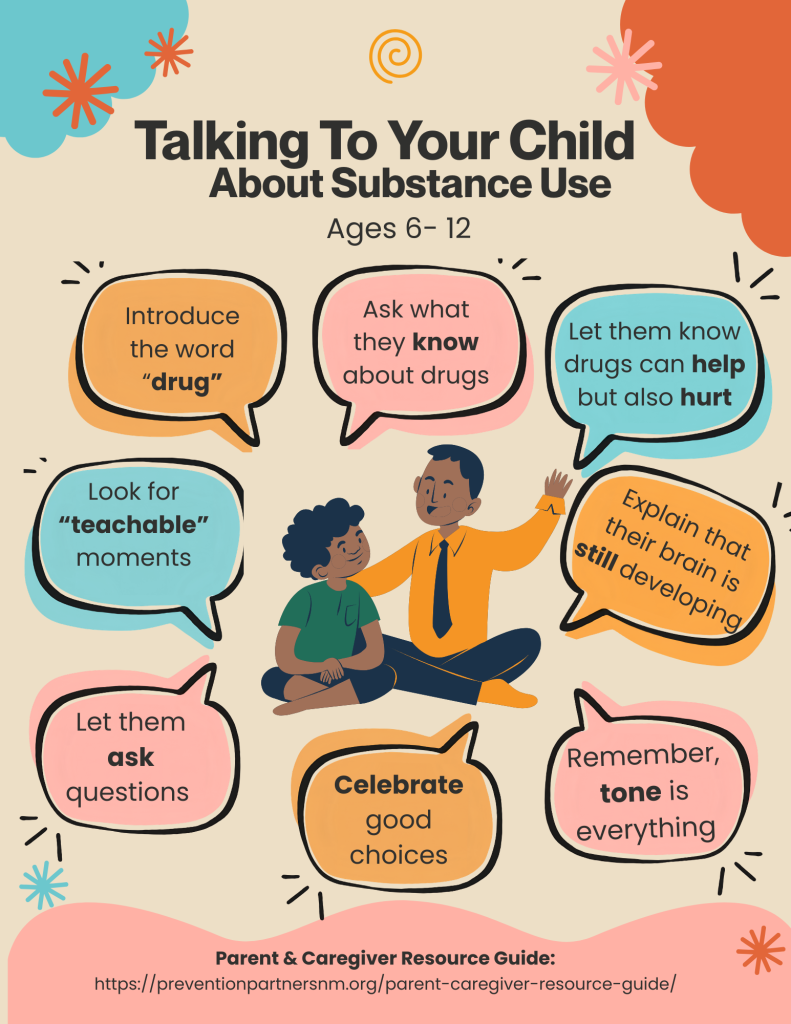
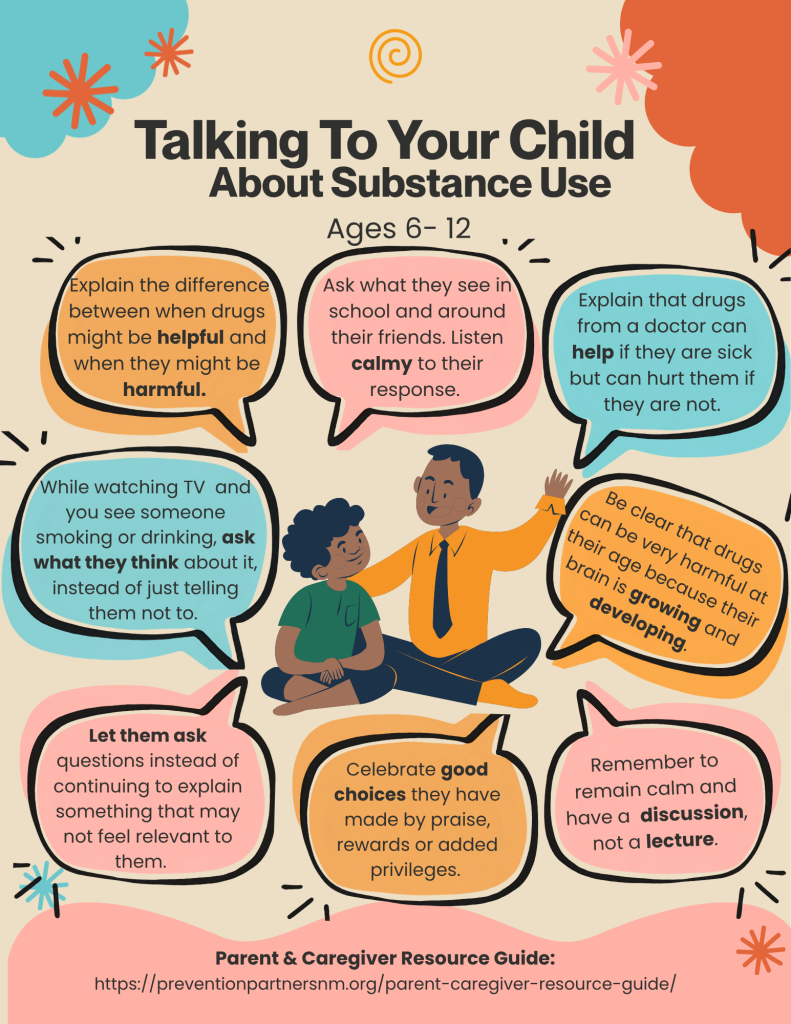
- If you have not already done so, introduce the word “drug”. Explain the difference between when some drugs might be helpful and when they might be harmful.
- Explain how some drugs-like medicines that a doctor gives can help them feel better if they are sick but can hurt them if they are not.
- Be clear that drugs like alcohol, nicotine and marijuana can be very harmful at their age because their brain is growing and making connections and pathways that drugs can change. This video by Daniel Siegel explains how the brain is “pruning” itself. Understand the Adolescent Brian-Daniel Siegel
- Look for “teachable” moments if you are watching TV or a video and you see someone smoking or drinking. You can ask “what do you think is going on in the show” “what do you think about them smoking or drinking” instead of telling them NOT to do it, see how they feel and use that as a jumping off point for this and future conversations.
- Conversations at this age can seem overwhelming to them so let them ask additional questions instead of continuing to explain something that may not feel relevant to them.
- Often at this age the introduction of these topics are enough but answer any questions they have as honestly and age-appropriately as you are able.
- Celebrate good choices they have made by praise, stickers or added privileges.
More Tips for talking to your child (Ages 6-12)
- Tone is everything. Think about a discussion, not a lecture. Ask them calmly what they know about drugs and what they see in school and around their friends.
- Find out where they get their information and concentrate on the substances that are most relevant in the area. Usually it is alcohol. Nicole and marijuana.
- Pay close attention if they mention other substances and keep facial expressions and tone calm and reassuring.
- Research “unknowns” or “misconceptions” and follow up if needed.
- Lead by example, they are watching what you and their trusted adults are doing.
- Find healthy activities to do together as a family that does not include any type of substance. Demonstrate that you can have fun without being on a substance.
Conversations about substance use should be clear, honest, and tied to their everyday experiences so they can relate to them. They are curious at this age but can understand cause-and-effect and are more aware of what is going on around them.
Additional Resources
Ask-Listen-Learn: https://asklistenlearn.org/about/
Responsibility.org, alongside a team of educators and organizations specializing in elementary- and middle schoolers, developed Ask, Listen, Learn: Kids and Alcohol Don’t Mix. Ask, Listen, Learn is a completely FREE digital underage drinking prevention program for kids ages 9-13 (grades 4-8) and their parents and educators with the goal to reduce underage drinking.
National Library of Medicine: National Library of Medicine: Development During Middle Childhood: The Years from Six to Twelve.