 English
 Arabic
 French
 Haitian Creole
 Khmer
Khmer Lao
Lao Myanmar (Burmese)
 Portuguese
 Spanish
 Swahili
 Vietnamese
May is Mental Health Awareness Month
in Local Events, Local News, Massachusetts News, National News
May is Mental Health Awareness Month:
May is Mental Health Awareness Month! May is dedicated to raising awareness and reducing the stigma associated with mental health issues. This month serves as a reminder that mental health is just as important as physical health. It encourages open conversations about mental health conditions and the importance of seeking help when needed. Mental Health Awareness Month aims to educate the public about mental health and related issues, promote acceptance, and advocate for policies that support people with mental health conditions and their families. It’s a time to acknowledge the struggles faced by those living with these conditions and to celebrate their resilience. Remember, it’s okay to not be okay, and reaching out for help is a sign of strength, not weakness.
How are mental health and substance use related?
Mental health disorders and substance use disorders often go hand-in-hand. One disorder may influence or exacerbate the other. For example, a person with a mental health disorder may turn to substances as a form of self-medication, worsening their mental health symptoms over time.
Statistics:
According to the CDC:
- More than 1 in 5 US adults live with a mental illness.
- Over 1 in 5 youth (ages 13-18) either currently or at some point during their life, have had a seriously debilitating mental illness.
- About 1 in 25 U.S. adults lives with a serious mental illness, such as schizophrenia, bipolar disorder, or major depression
What can you do to show your support?
- Educate Yourself: Learn about mental health, the warning signs, and available treatment options. Click here for a resource on warning signs and symptoms.
- Be a Good Listener: If someone confides in you about their struggles with their mental health issues, listen without judgment. Show empathy and encourage them to seek professional help.
- Encourage Treatment: Gently encourage the person to seek professional assistance. Offer to help them find resources such as counseling, support groups, or treatment centers.
- Offer Emotional Support: Let them know you care. Be there for them during difficult moments. Sometimes, a compassionate friend or family member can make a significant difference.
- Attend Support Groups Together: If appropriate, attend support groups or therapy sessions with them. Your presence can provide comfort and encouragement.
- Learn Crisis Intervention Techniques: Understand how to handle crisis situations related to mental health disorders. Be prepared to call emergency services if necessary.
Parents & Caregivers
Parents and caregivers are often the first to notice when something isn’t quite right with a young person’s mental health. Changes in mood, behavior, sleep, appetite, or social connections can be early signs that a child or teen may be struggling. Because they know their child best, caregivers are in a unique position to recognize these shifts early and respond with care and support. By creating a safe, open environment for conversation, listening without judgment, and seeking help when needed, parents and caregivers play a critical role in promoting early intervention, reducing stigma, and helping youth build resilience and well-being.
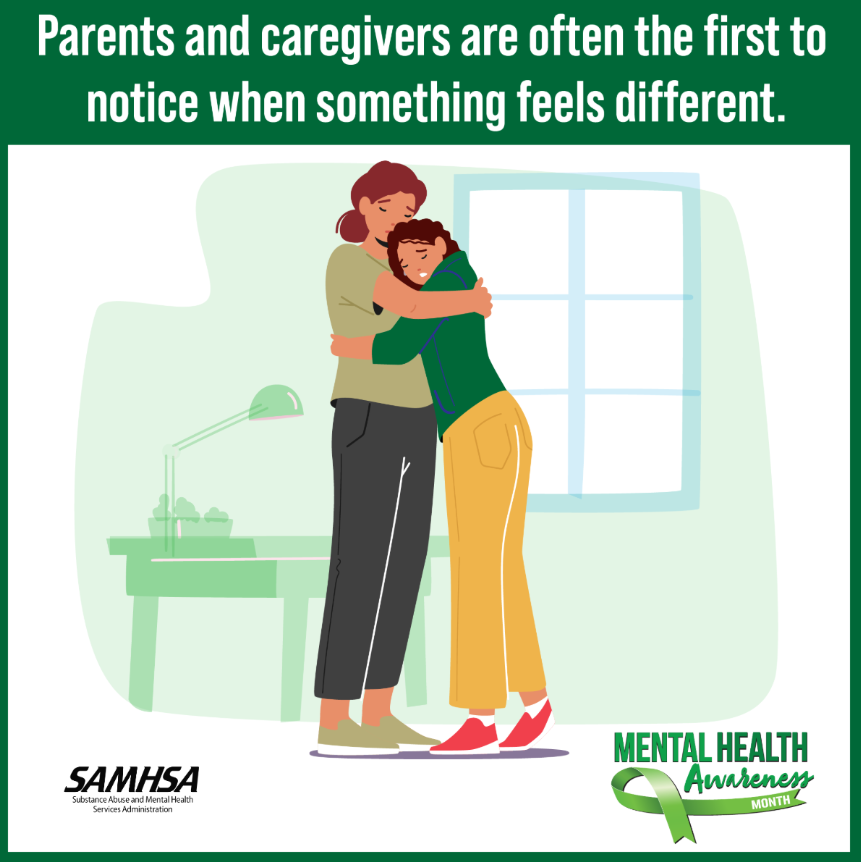
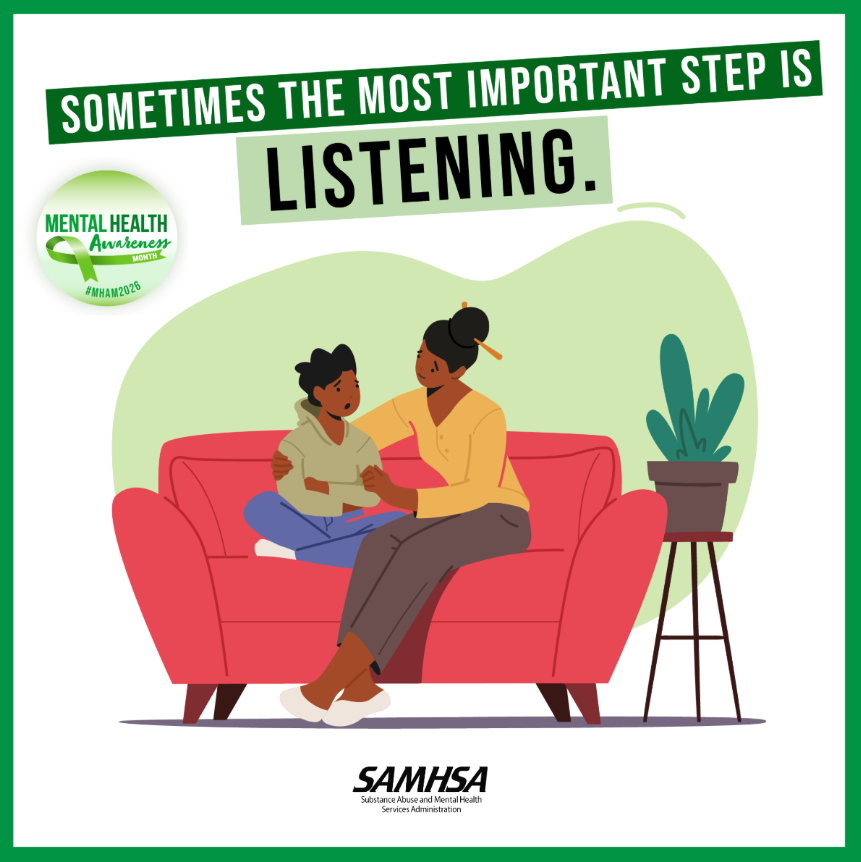
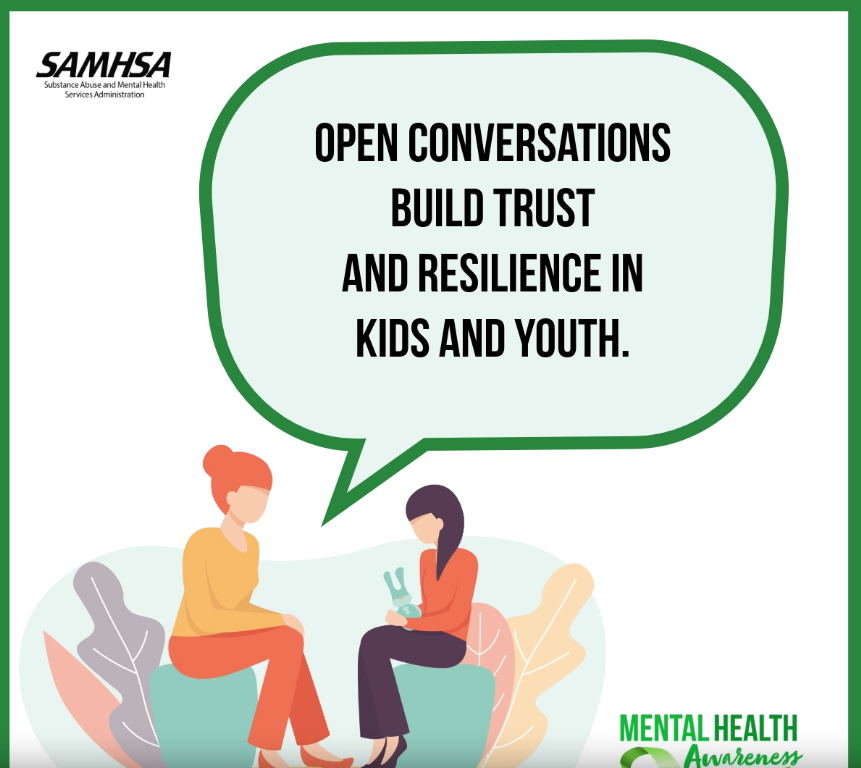
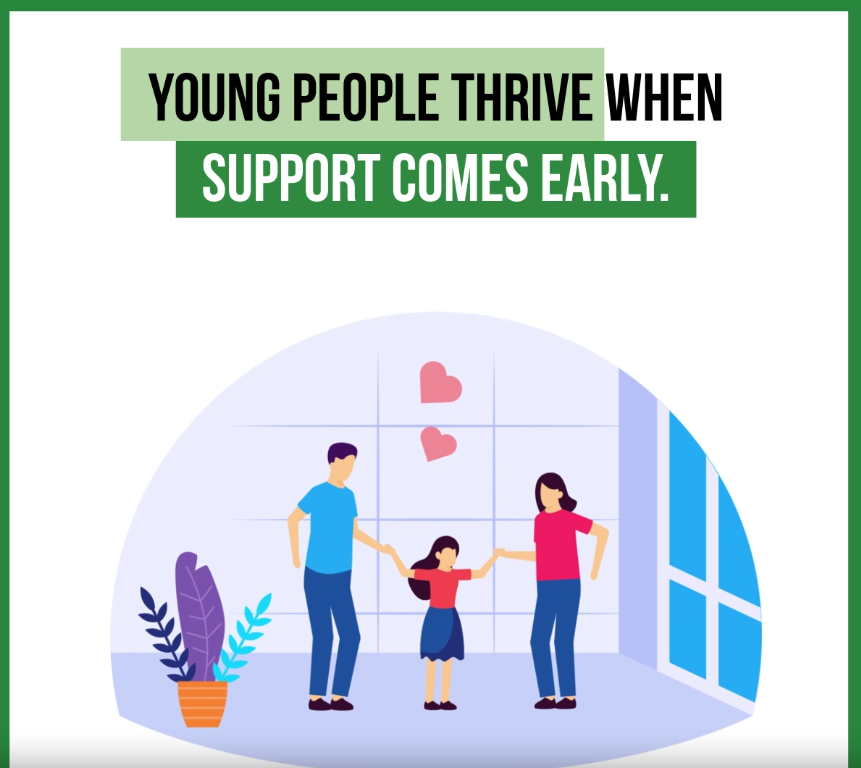
Visuals from SAMSHA
Resources:
- If you or someone you know is struggling or in crisis, help is available. Call or text 988 or chat 988lifeline.org.
- To learn how to get support for mental health, drug, and alcohol issues, visit FindSupport.gov.
- To locate treatment facilities or providers, visit FindTreatment.gov or call SAMHSA’s National Helpline at 800-662-HELP (4357).
Check out our Video Library on Restorative Practices to find a video series specifically for parents on how to communicate effectively with your child.